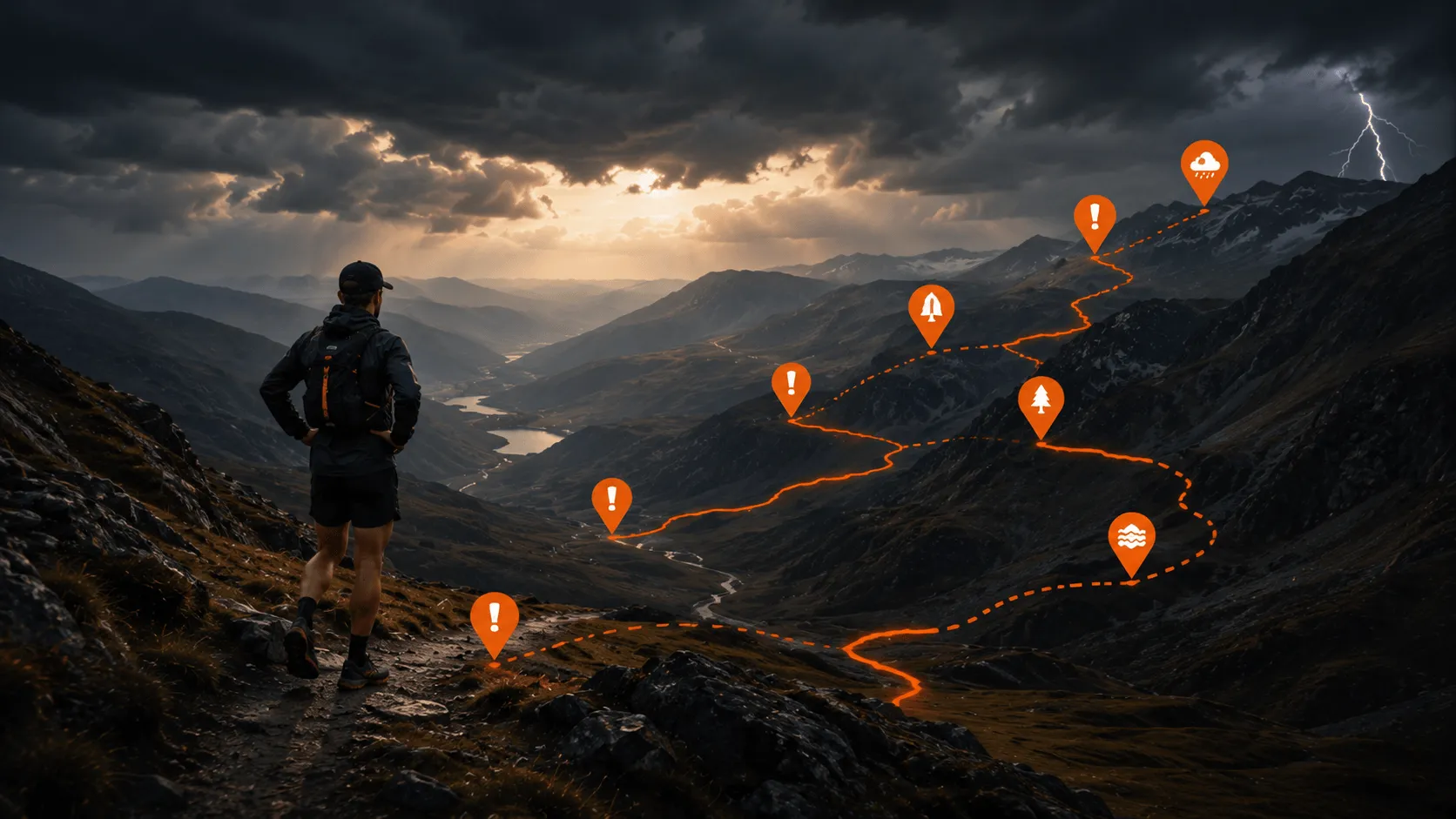
Ultra marathon routes often look fixed months before race day. The reality is very different.
Behind every published route is a race team dealing with landowners, weather forecasts, trail conditions and countless other variables.
Here are seven common reasons ultra marathon routes change at the last minute.
1. Fallen Trees Blocking the Trail
Winter storms and strong winds regularly bring down trees across trails and footpaths.
While a single fallen tree might be easy to navigate around, large areas of woodland can become completely impassable.
Race organisers may be forced to introduce diversions only days before an event.
2. Flooding
Flooded river crossings and waterlogged trails are among the most common causes of route changes.
A section that was perfectly runnable during route planning can become dangerous after heavy rainfall.
Safety always comes first.
3. Landowner Access Issues
Many races rely on access agreements with private landowners.
Occasionally permissions change unexpectedly, requiring organisers to reroute sections of the course at short notice.
4. Wildlife and Conservation Restrictions
Protected nesting birds, conservation projects and seasonal environmental restrictions can affect route access.
Certain areas may become temporarily unavailable despite being included in the original route.
5. Road Closures and Infrastructure Work
Unexpected roadworks, bridge repairs and utility projects can create significant challenges for race organisers.
Sometimes only a small adjustment is needed. Other times entire sections require redesigning.
6. Severe Weather Conditions
Mountain races are particularly vulnerable to weather related changes.
High winds, thunderstorms and extreme temperatures can all force organisers to alter routes to reduce risk.
Many runners have arrived on race morning to discover a modified course.
7. Emergency Safety Concerns
Occasionally organisers identify hazards during final course inspections.
Unstable ground, damaged bridges or dangerous trail conditions may only become apparent shortly before the event.
In these situations route changes are often unavoidable.
Why This Matters for Runners
Many runners download a GPX file weeks before race day and assume it won’t change.
That’s a risky approach.
If a route is updated and you continue using an old version, you could find yourself following a section of trail that is no longer part of the race.
Keeping Everyone on the Same Route
The challenge for organisers isn’t just updating a route. It’s making sure every runner receives the latest version.
This is where dedicated route management platforms make a huge difference.
Instead of distributing files through email chains or social media posts, organisers can publish updates instantly while maintaining a full version history.
Final Thoughts
Route changes aren’t signs of poor organisation. They’re often signs of responsible organisation.
The best race directors adapt when conditions change.
The best runners make sure they’re carrying the latest GPX file.